
Exterior shade buying guide
Manual vs. Motorized Exterior Zipper Shades
Compare crank-operated and powered zipper track shades for St. Augustine patios, porches, lanais, outdoor kitchens, pergolas, and poolside spaces.
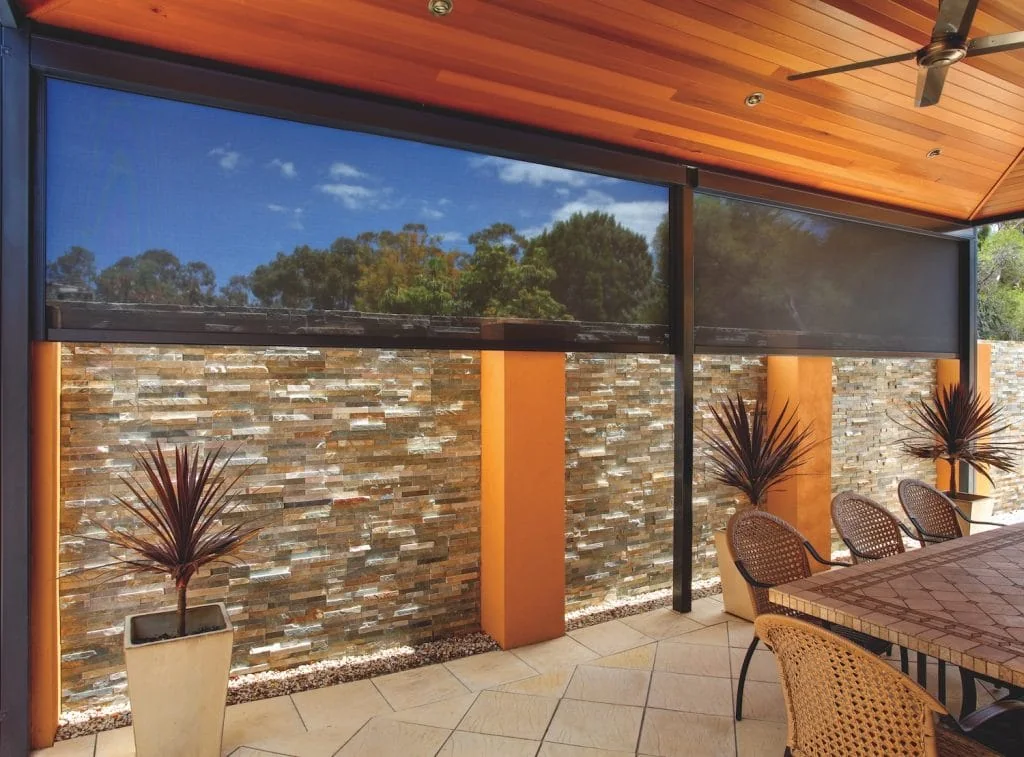
The right control changes how often you use the shade
Both systems provide shade—the difference is how they fit your routine.
Manual and motorized zipper shades can use the same basic captured-edge concept. The choice is not simply “basic versus premium.” It should be based on opening size, shade weight, frequency of operation, accessibility, number of openings, available power, control preferences, and budget.
A manual crank can be an excellent fit for a single opening that is easy to reach and adjusted only when the sun becomes uncomfortable. Motorization becomes more compelling when the opening is large, the shade will move every day, several shades should operate together, or the control location would otherwise be inconvenient.
| Consideration | Manual crank | Motorized |
|---|---|---|
| Best fit | One or a few accessible openings with occasional use | Large, tall, frequently used, or grouped openings |
| Operation | Removable or fixed crank handle | Remote, wall control, app, automation, or grouped control depending on motor |
| Power | No electrical power required | Battery, plug-in, solar-assisted, or hardwired options depending on system |
| Upfront cost | Usually lower | Higher because of motor, controls, and possible electrical work |
| Daily convenience | Shade must be operated at the opening | Shade can be operated from a convenient control point |
| Multiple shades | Operated individually | Can often be grouped or controlled by zone |
| Maintenance | Crank and gear components | Motor, power source, controls, and programming in addition to the shade system |
When a manual crank is the smart choice
Manual operation is often practical for a modest-size shade next to a patio seating area, grill, outdoor kitchen, or porch opening. It avoids electrical preparation and keeps the control simple. A crank system is also useful when the shade may only be lowered during a particular time of day or season.
The crank location should be reachable without moving furniture or leaning over railings. The operator should also understand the correct direction and stopping point so the fabric and bottom bar are not forced beyond their intended limits.
When motorization is worth the upgrade
Motorization is especially useful for wide or tall patio bays, several adjacent openings, shades mounted behind furniture, and outdoor rooms that are adjusted every morning and evening. A motor can make the shade feel like part of the home rather than a product that is only used occasionally because it is inconvenient.
Depending on the selected motor and controls, powered shades may operate from a handheld remote, wall switch, mobile app, grouped channel, timer, scene, or compatible smart-home platform. Some systems may also support sun or wind accessories, but availability and recommended use vary by manufacturer and installation.
Power planning should happen early
The motor choice affects fabrication, wiring, charging, control range, and installation. Hardwired power may create the cleanest long-term setup for new construction or major outdoor renovations, while battery or plug-in options can simplify some retrofit projects. Electrical work should be planned before the shade is ordered, not after the cassette arrives.
Do not choose only by opening width
A large opening often favors motorization, but weight, height, fabric, tube selection, exposure, and how often the shade will move also matter. Conversely, a smaller shade can still benefit from motorization when it is hard to reach or part of a group.
The most useful consultation compares the complete system and your daily routine. The goal is not to add technology for its own sake; it is to select a control you will actually use.
Not sure which control is right?
Share the number of openings, approximate sizes, how often you expect to operate the shades, and whether power is available.
Frequently asked questions
Exterior zipper shade questions
Are manual zipper shades hard to operate?
A correctly sized geared crank system should operate smoothly, but effort varies with the opening, shade weight, gear ratio, and product. The crank location must also be reachable and convenient.
Do motorized exterior shades need an electrician?
Some systems use battery, plug-in, or solar-assisted power while others are hardwired. Hardwired work and new circuits should be handled by an appropriately qualified electrical professional.
Can several exterior shades operate together?
Many motorized systems support group or zone control so several shades can move together. The exact controls depend on the selected motor and remote or automation platform.
Is motorization worth it for one patio shade?
It can be when the shade is large, used daily, difficult to reach, or part of an outdoor space where convenience matters. A smaller, occasionally used opening may be well served by a manual crank.
What happens during a power outage?
A hardwired motor normally will not operate without power unless the system includes backup capability. Battery-powered controls depend on battery charge. Manual systems remain independent of electrical service.
Can I add a motor later?
Sometimes, but not every manual system is designed for simple conversion. If future motorization is likely, discuss it before ordering so the tube, controls, power, and installation can be planned accordingly.
Continue planning
Related exterior shade resources
Ready to compare outdoor shade options?
Request a consultation for manual or motorized exterior zipper shades in St. Augustine and nearby St. Johns County communities.